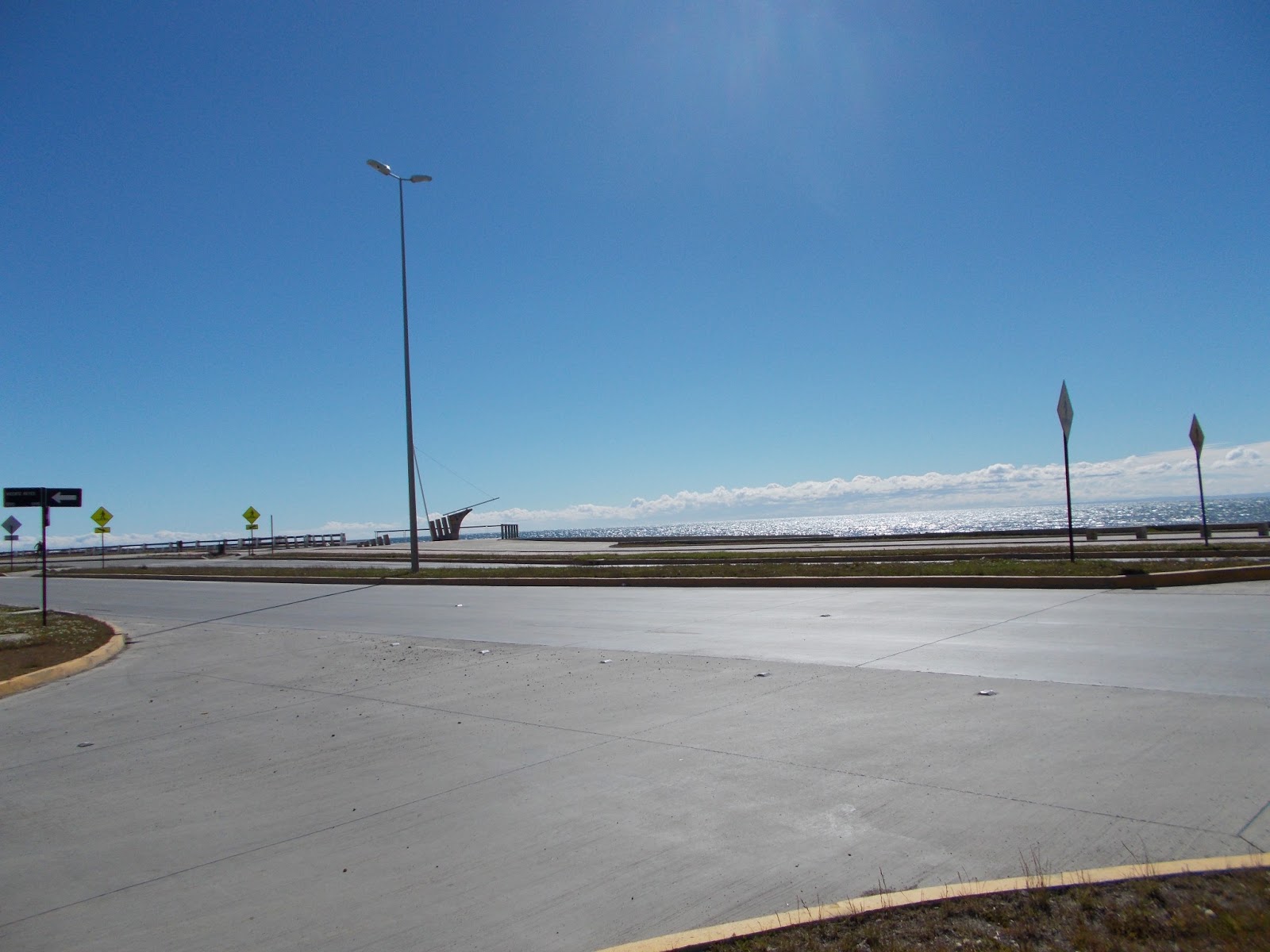
During XVII and XVIII centuries the flow of vessels grew considerable through the Strait of Magellan. In fact, not many places in the world can exhibit such number of expedition in History, but also the flow of navigators originated an appreciable number of shipwreck.
www.caphorniers.cl/magallanes/naufragios.htm
During those centuries the Spanish kingdom experienced economic and military decline while England and Holland started to surge in the world scenery as maritime powers. Large number of scientific expeditions, merchants, explorers, corsairs, traders, privateers, buccaneers and famous sailors navigated through Magellan Strait; familiar names are captain John Strong, Jacques Braunchesne-Gouin, Jacob Mahu, Simon de Cordes, John Narborough, the brothers Bartolomé and Gonzalo de Nodal, and much more.
All of them contributed to elaborate maritime letters of Region of Magellan, actually Holland explorers were the first in elaborating a nautical letter and a navigation map which were used by navigators of all nations for more than two centuries.
During XIX century Spanish colonies in Southamerica were in their emancipation process.
The General Bernardo O'Higgins, Supreme Director of Chile, deposed in 1823, from his voluntary exile in Peru emphasised the importance of Chilean control over Strait of Magellan and urged Chilean rulers to take decisive measurements, fearing an occupation by Great Britain or France.
The introduction of steam navigation, the English occupation of Falkland islands (Islas Malvinas) in 1833 and the intention of France to establish a port in the strait coastline opened President Bulnes mind and in 1843 he ordered an expedition in order to take possession of the strait and found a settlement in the region. Then, 21 September 1843, the schooner Ancud, under the command of commander John Williams Wilson (Juan Guillermo), arrived in Punta Sant'Ana where took possession of Strait of Magellan on behalf of Chilean government.
Few weeks later, 30 October, 263 years after Pedro Sarmiento de Gamboa took possession of the strait on behalf of Spanish king Felipe II, John Williams Wilson founded the Fort Bulnes, named after Manuel Bulnes, President of Republic of Chile. A settlement around the fort would be built to colonise the region.
Interestingly, it is known that, twenty four hours after the foundation of Fort Bulnes the French schooner Phaeton arrived to Magellan Strait in order to build a French port in the same area, Punta Sant'Ana.
However Fort Bulnes did not flourish. Due to the hard weather conditions and desolate area Chilean government struggled to establish a settlement around Punta Sant'Ana.
Eventually in 1848, a new governor, Jose dos Santos Mardones, moved the scarce population of Fort Bulnes 60 km north, near a river, in Punta Arenas where the city was founded leaving behind 5 years of hardship.
Finally, the Fort Bulnes was abandoned and destroyed in fire set by lieutenant Cambiaso, head of a mutiny against the governor of Punta Arenas. But between 1941-1943 a replica of the fort was built and in 1968 was declared National Monument.
Today, the Fort Bulnes is part of History-Patagonia Park giving to visitors a good idea what life was in the first 5 years of colonisation in Region of Magellan. Also the park offers trails and lookouts from which the visitors can have a magnificent view of Magellan strait and its surroundings.
www.phipa.cl
Recommendation:
Book: The Captive Boy in Tierra del Fuego, by Phebe A Hanaford, published in 1877.
The book is a life story, an authentic narrative of the wreck of the ship "Manchester" and the survival of Thomas Coffin, a 11 years old boy, and his ordeal among the Aborigines who lived in Great island of Land of Fire.
Bibliography:
John Williams Wilson was also known as Juan Guillermo, his Spanish name.
He was a Chilean sailor born in Bristol (1798) to a family with a long seafaring tradition. He arrived in Chile in 1818 and few years later entered the Chilean Navy rising to the rank of lieutenant. He participated actively in political affairs of the republic and became known in Chilean History in the event of taking possession of the Strait of Magellan and adjacent territories on behalf of Republic of Chile.
In his honour Luiza Port, in Navarino Island, was rebaptised Williams Port, which is the southmost city of the world and mayor hub for scientific activities associated with Antarctica and Land of Fire Archipelago.
Tourist Attractions:
Martin Gusinde Anthropological Museum: it hosts artefacts, maps and photographs related to Yagan people.
Omora Ethnobothanical Park: www.omora.org
Birdwatching opportunities
Cycling along the cost road
Trekking: Dientes de Navarino circuit: www.mountainphotographer.com/dientes-de-navarino/
The Strait of Magellan, is the most important natural passage between the Atlantic and Pacific oceans. The Strait, in its whole length, 330 nautical miles, belongs to Chile although its eastern entrance is surrounded by argentine waters, but the international treaties of 1881 and 1984 allow access and sailing from and to the eastern mouth of the strait to vessels of all nations at any time and in any circunstances.
Monday, 15 April 2013
Monday, 4 March 2013
The first attempt of colonization
After Ferdinand Magellan circumnavigated the world it opened way to others intrepid sailors navigate through seas unknown to Europeans.
In 1577, the queen Elizabeth I seeing her rival kingdom, Spain, expanding his empire to the west, secretly commissioned Francis Drake, a privateer (a pirate working for a government), to lead a expedition to cross Pacific Ocean. He left Plymouth in December with 4 ships and 164 men and returned to England 3 years later, 1580, with a reduced fleet: one ship and 69 men.
In his return drake was acclaimed as the first English sailor to circumnavigate the world bringing value information that helped English people that time to learn more about the world. Also he brought a treasure for the queen that exceeded the crown's income that year. In gratitude the queen knighted him on the deck of his ship, The Golden Hint.
Also Drake brought a coconut as a souvenir, was unknown fruit by English people, and gave it to Elizabeth I. Then she ordered to engrave the coconut cup and mounted it in silver as a token in remembrance of his voyage.
Drake's coconut cup is in display at National Maritime Museum, Greenwich, London.
After Drake's successful voyage around the world the king of Spain, Phillip II, sent a expedition led by Sarmiento de Gamboa in order to fortify All Saints Strait, name given by Ferdinand Magellan and later baptised Mother of Jesus Strait and finally received the name of its explorer, Ferdinand Magellan.
In September 1581, Pedro Sarmiento de Gamboa left Seville, Spain, with 23 ships and 2500 persons, building materials, winter cloths, food, seeds, artillery and other necessities to start the colonisation of the region. His plan was to build two cities: one north-east entrance (Atlantic ocean) and another south-west entrance (Pacific ocean).
The voyage was a true challenge, they faced strong storms and a important number of ships wrecked which caused a number of sailors and future colonists abandon the expedition. Finally when, in 1584, they arrived in the strait they were a reduced number of 4 ships and around 500 persons, among them 13 women and 11 children.
Sarmiento de Gamboa funded the city Name of Jesus in Punta Dungenes (north-east) and city King Phillip (Rey Don Felipe) in Punta Sant'Ana (South-west).
After that a series of unfortunate events affected Gamboa and the colonists of both cities.
After funded the city King Phillip, Sarmiento de Gamboa navigating to explore the area around the strait was caught by a storm that dragged him along to Atlantic ocean taking him aside from the rest of the colonists to Brazil coast. Worried about the colonists he sent a cargo of cloths and food to them but the ship wrecked before getting its destination.
Knowing what happened Gamboa travelled to Pernambuco (north Brazil) looking for support but his ship also wrecked and he was miraculously saved gripping a tree trunk that was floating in the ocean.
Desperate for support he decided to return to Spain but in his way was captured by English pirates that took him to England, but because the queen Elizabeth I wanted friendship with Kingdom of Spain she let him free. However his hardship do not finish there, in his way to Spain he was captured by Huguenots, French religious protestants, that took him to the Mont Marsan Castle where he stay in prison for 44 mouths.
In 1590 the king of Spain, Phillip II, paid a ransom for his freedom. Then finally he returned to Spain but his health deteriorated.
Still not loosing hope, Gamboa asked King Phillip support for coming back to Magellan Strait, although six years had passed since he left the colonists. But again luck was not on his side, in July 1592 in his way to Magellan Strait, in Portugal coast, he got seriously ill and was taken to hospital in Lisbon where he died.
What hardship for a intrepid navigator!
For the colonists of the two settlements the situation was extremely difficult as well. In January 1587, 3 years after Gamboa left Strait of Magellan, Thomas Cavendish, another English pirate, arrived to the strait looking for the Spanish colonies with eagerness to steal the artillery brought to defend the settlements.
Then Cavendish met Tomé Hernandez who told him that all colonists were reunited in the city King Phillip where they died mainly from malnutrition, but also from hypothermia, intoxication, violence. And he said that in desperation some of them committed cannibalism. He claimed to be the only survivor.
Cavendish then buried the corps and changed the name of the settlement to Famine Port.
Tourist attraction: History-Patagonia Park
The park is located 60 km from Punta Arenas, the capital of Magellan Region.
The park has 130 hectares of native Patagonian forest and is the setting of the history of colonisation of the region and also a archaeological site.
The park offers a net of trails and viewpoints that allow visitors to observe the fauna and flora and enjoy the southern landscape.
The area also marks the geographical centre of Chile.
History- Patagonia Park: www.phipa.cl
In 1577, the queen Elizabeth I seeing her rival kingdom, Spain, expanding his empire to the west, secretly commissioned Francis Drake, a privateer (a pirate working for a government), to lead a expedition to cross Pacific Ocean. He left Plymouth in December with 4 ships and 164 men and returned to England 3 years later, 1580, with a reduced fleet: one ship and 69 men.
In his return drake was acclaimed as the first English sailor to circumnavigate the world bringing value information that helped English people that time to learn more about the world. Also he brought a treasure for the queen that exceeded the crown's income that year. In gratitude the queen knighted him on the deck of his ship, The Golden Hint.
Also Drake brought a coconut as a souvenir, was unknown fruit by English people, and gave it to Elizabeth I. Then she ordered to engrave the coconut cup and mounted it in silver as a token in remembrance of his voyage.
Drake's coconut cup is in display at National Maritime Museum, Greenwich, London.
After Drake's successful voyage around the world the king of Spain, Phillip II, sent a expedition led by Sarmiento de Gamboa in order to fortify All Saints Strait, name given by Ferdinand Magellan and later baptised Mother of Jesus Strait and finally received the name of its explorer, Ferdinand Magellan.
In September 1581, Pedro Sarmiento de Gamboa left Seville, Spain, with 23 ships and 2500 persons, building materials, winter cloths, food, seeds, artillery and other necessities to start the colonisation of the region. His plan was to build two cities: one north-east entrance (Atlantic ocean) and another south-west entrance (Pacific ocean).
The voyage was a true challenge, they faced strong storms and a important number of ships wrecked which caused a number of sailors and future colonists abandon the expedition. Finally when, in 1584, they arrived in the strait they were a reduced number of 4 ships and around 500 persons, among them 13 women and 11 children.
Sarmiento de Gamboa funded the city Name of Jesus in Punta Dungenes (north-east) and city King Phillip (Rey Don Felipe) in Punta Sant'Ana (South-west).
After that a series of unfortunate events affected Gamboa and the colonists of both cities.
After funded the city King Phillip, Sarmiento de Gamboa navigating to explore the area around the strait was caught by a storm that dragged him along to Atlantic ocean taking him aside from the rest of the colonists to Brazil coast. Worried about the colonists he sent a cargo of cloths and food to them but the ship wrecked before getting its destination.
Knowing what happened Gamboa travelled to Pernambuco (north Brazil) looking for support but his ship also wrecked and he was miraculously saved gripping a tree trunk that was floating in the ocean.
Desperate for support he decided to return to Spain but in his way was captured by English pirates that took him to England, but because the queen Elizabeth I wanted friendship with Kingdom of Spain she let him free. However his hardship do not finish there, in his way to Spain he was captured by Huguenots, French religious protestants, that took him to the Mont Marsan Castle where he stay in prison for 44 mouths.
In 1590 the king of Spain, Phillip II, paid a ransom for his freedom. Then finally he returned to Spain but his health deteriorated.
Still not loosing hope, Gamboa asked King Phillip support for coming back to Magellan Strait, although six years had passed since he left the colonists. But again luck was not on his side, in July 1592 in his way to Magellan Strait, in Portugal coast, he got seriously ill and was taken to hospital in Lisbon where he died.
What hardship for a intrepid navigator!
For the colonists of the two settlements the situation was extremely difficult as well. In January 1587, 3 years after Gamboa left Strait of Magellan, Thomas Cavendish, another English pirate, arrived to the strait looking for the Spanish colonies with eagerness to steal the artillery brought to defend the settlements.
Then Cavendish met Tomé Hernandez who told him that all colonists were reunited in the city King Phillip where they died mainly from malnutrition, but also from hypothermia, intoxication, violence. And he said that in desperation some of them committed cannibalism. He claimed to be the only survivor.
Cavendish then buried the corps and changed the name of the settlement to Famine Port.
Tourist attraction: History-Patagonia Park
The park is located 60 km from Punta Arenas, the capital of Magellan Region.
The park has 130 hectares of native Patagonian forest and is the setting of the history of colonisation of the region and also a archaeological site.
The park offers a net of trails and viewpoints that allow visitors to observe the fauna and flora and enjoy the southern landscape.
The area also marks the geographical centre of Chile.
History- Patagonia Park: www.phipa.cl
Friday, 8 February 2013
The first inhabitants.
The History of the inhabitants in the area of Magellan Strait, according to archaeologists started 12 years ago when group of hunters after crossing the Bering Strait arrived to American territory.
The Tehuelches had no better luck. Middle 1800 the population of Punta Arenas began to grow quickly because the exploitation of wood and gold in the region. Also the government of Chile conceded large hectares of land for the called colonisers of the region whom incurred in abusive treat toward the Indians, as a result the Aonikenks abandon the Chilean territory. Also they caught contagious diseases. The last time they were seen in Chile was about 1927.
Today the descendants of the Yamanas leave in Navarino Island, Antarctica Province, in Ukika Village.
In 1992, they pleaded for justice. They asked to Chilean government to repair the damage caused which led their community near extinction.
In response the Yamana and Kawesqar descendants were included in the Indigenan Law which means they now receive governmental protection and support. Also the land in Mejillones Bay was returned to the Yamanas.
The last descendants of the Kawescar leave in Eden Port, their population is only 250 individuals.
In 2008 one of the last pure Yagans died, although he believed he was the last one Historians believe there are 3 of them still alive, however no pure Kawescar women which means the extinction of the race is imminent.
In 1881 eleven aborigines (4 men, 4 women, 3 young children) were kidnapped by a German sealer, Karl Hagenbeck, taken to Paris and put on show as cannibals in the Jardin D'Aclimatation, it was actually the first stop. Then they were taken to Berlin and put on show at the Zoo, Leipzia, Munich, Stuttgart, Nuremberg and Zurich.
129 years after that unfortunate event the skeletons of Henry, Luse, Greth, Piskouna and Captain (names given to them in Europe) were found in the drawers of the department of Anthropology of University of Zurich. Being aware of that, the Chilean government initiated the proceedings to repatriate them.
At the beginning of 2010 the rest of 5 Alacalufes were received by the president Michelle Bachelet and transferred to Karukinka Island where they were placed in a cave according their tradition.
Also a group of Selk'Nam were kidnapped by a Belgian whaler who took them to Europe in chain "like Bengalese tigers" then the business man Maurice Maitre put them on show in Paris and London.
The Maggiorino Borgatello Museum, Punta Arenas, exhibits an interesting ethmographical collection.
The museum has 4 levels where you can explore in areas like culture, History, religion, fauna, flora and trade in Region of Magellan. Also a valuable library and an extensive photographic and audio-visual material about ethnias and History of Patagonia.
museomaggiorinoborgatello.cl
Recommendation: Book: Patagonia Fire Shadows
Author: Carlos Vega Delgado.
Archaeologists date the human occupations in southern region about 12.900 years ago, traces were found in Chile and Argentina.
In Land of Fire discoveries show occupations of 12.280 to 11.880 years ago where hunters and extinct animals, milodon and pygmy horses, lived together.
In XVI century when Ferdinand Magellan's expedition arrived to the Strait there were 4 groups of aborigines that lived harmoniously with the environment and between themselves:
Aonikenks, which means <<people from the south>>. They also are known as Tehuelches, inhabited the territories between Santa Cruz river and Magellan Strait.
They were skillful hunters and used to walk long distances in search of guanaco and ñandu (ostrich). Their population counted more than 4.000 individuals.
Selk'Nam, <<sons of the land>>, also known as Onas. They dwelt in the Great Island of Land of Fire. Like the Tehuelches they were skillful hunters and their population reached no more than 5.000 people.
Yamanas, <<people from mountain-valley-channel>>. Also named Yahgashaga. The English missionary Thomas Bridges abbreviated the word to Yagan, but they were known by English-speaking world as Fuegians.
They were skillful canoe makers and lived in the coastline, most of the time in their canoes. They navigate mainly south of Strait of Magellan, Beagle Canal and Horn Cape hunting sea lions. Their population was about 3.000 individuals.
Kawesqar, <<rational of skin and bones>>. Also known as Alacalufe.They also were seafaring people and used to stay along the day sailing through the canals and fjords of Patagonia and camped in the beaches during the night. In 1880 T Bridge calculated their population no more than 3.000.
The European navigation through the Strait and eventually the colonisation of the region caused many troubles to the natives. They suffered the cruel effects of human greed.
The Land of Fire territory for thousands of years had been a free zone for hunting, but Europeans immigrants fenced it in and replace guanacos for sheeps. In consequence many Onas were killed under the excuse of being stolen sheeps from the farms. Others died after contracting virus unknown in the region before the colonisation.
The Tehuelches had no better luck. Middle 1800 the population of Punta Arenas began to grow quickly because the exploitation of wood and gold in the region. Also the government of Chile conceded large hectares of land for the called colonisers of the region whom incurred in abusive treat toward the Indians, as a result the Aonikenks abandon the Chilean territory. Also they caught contagious diseases. The last time they were seen in Chile was about 1927.
In 1850 an Anglican mission established in the Beagle Canal area built a hospital, houses, a school and a church to educate and evangelise the Yagans in order to help them to adapt themselves to the new society, which was very difficult to them to assimilate.
Although the mission attracted many of them it was a failure, they had to leave in huts, wear Europeans cloth and work in jobs they were not interested at all. As a result many of them suffered from depression. Also an outbreak of rubella decreased their number significantly. After that the survivors leaved in different missions that, little by little, debilitated their culture and the capacity to communicate in their own language.
In Last Hope Province the pioneers received large extensions of land to set sheep farmers which ended in numerous conflicts between them and the Kawesqar. According Joseph Emperaire, Kawesqar population started to decrease in number since the foreigners occupied their lands. They were victims of violence. They were introduced to alcoholism. They were infected with STD and contagious diseases like tuberculosis and flu, which deteriorated their health and strength.
Today the descendants of the Yamanas leave in Navarino Island, Antarctica Province, in Ukika Village.
In 1992, they pleaded for justice. They asked to Chilean government to repair the damage caused which led their community near extinction.
In response the Yamana and Kawesqar descendants were included in the Indigenan Law which means they now receive governmental protection and support. Also the land in Mejillones Bay was returned to the Yamanas.
The last descendants of the Kawescar leave in Eden Port, their population is only 250 individuals.
In 2008 one of the last pure Yagans died, although he believed he was the last one Historians believe there are 3 of them still alive, however no pure Kawescar women which means the extinction of the race is imminent.
In 1881 eleven aborigines (4 men, 4 women, 3 young children) were kidnapped by a German sealer, Karl Hagenbeck, taken to Paris and put on show as cannibals in the Jardin D'Aclimatation, it was actually the first stop. Then they were taken to Berlin and put on show at the Zoo, Leipzia, Munich, Stuttgart, Nuremberg and Zurich.
![]() |
| Jardin D'Acclamatation, Paris |
Jadin D'Acclamatation, Paris
Peter in the Jardin D'Acclamatation, Paris129 years after that unfortunate event the skeletons of Henry, Luse, Greth, Piskouna and Captain (names given to them in Europe) were found in the drawers of the department of Anthropology of University of Zurich. Being aware of that, the Chilean government initiated the proceedings to repatriate them.
At the beginning of 2010 the rest of 5 Alacalufes were received by the president Michelle Bachelet and transferred to Karukinka Island where they were placed in a cave according their tradition.
Also a group of Selk'Nam were kidnapped by a Belgian whaler who took them to Europe in chain "like Bengalese tigers" then the business man Maurice Maitre put them on show in Paris and London.
![]() |
| Maurice Maitre and Selk'nam in Europe |
The Maggiorino Borgatello Museum, Punta Arenas, exhibits an interesting ethmographical collection.
The museum has 4 levels where you can explore in areas like culture, History, religion, fauna, flora and trade in Region of Magellan. Also a valuable library and an extensive photographic and audio-visual material about ethnias and History of Patagonia.
museomaggiorinoborgatello.cl
Recommendation: Book: Patagonia Fire Shadows
Author: Carlos Vega Delgado.
Sunday, 20 January 2013
The Magellan Strait Costline, Punta Arenas
Punta Arenas is the capital of the XII Region of Chile, Region of Magellan and Chilean Antarctica. It is the southernmost capital of the world.
The tourism industry is growing fast in the region which is contributing for the urban development of the city and attracting 227.000 tourists yearly. There are interesting tourist attractions in the city: picturesque places, museums, historical squares, natural reserves, marshland, monuments, duty free shops and a coastline made to measure for everyone have fun.
The Punta Arenas coastline is a 3km urban platform of modern squares, footpath, cycle lane and a trail for blind people. Also counts with court for sports, exercise machines, chest game tables, nice areas for resting, beautiful panoramic view and a freezing water beach.
The people of the city are very proud and enjoying their coastline road very much.
Urban Art: like postal cards about the History of the city, 5 walls have been painted in the frontal of different buildings in the coastline road. The event was financed by the Council of Culture and the Arts.
They are more than 500 metres, in grand format and in perspective that trick human eyes.
The tourism industry is growing fast in the region which is contributing for the urban development of the city and attracting 227.000 tourists yearly. There are interesting tourist attractions in the city: picturesque places, museums, historical squares, natural reserves, marshland, monuments, duty free shops and a coastline made to measure for everyone have fun.
The Punta Arenas coastline is a 3km urban platform of modern squares, footpath, cycle lane and a trail for blind people. Also counts with court for sports, exercise machines, chest game tables, nice areas for resting, beautiful panoramic view and a freezing water beach.
The people of the city are very proud and enjoying their coastline road very much.
They are more than 500 metres, in grand format and in perspective that trick human eyes.
Subscribe to:
Posts (Atom)